
Driveway Material Choices for South Florida Homes
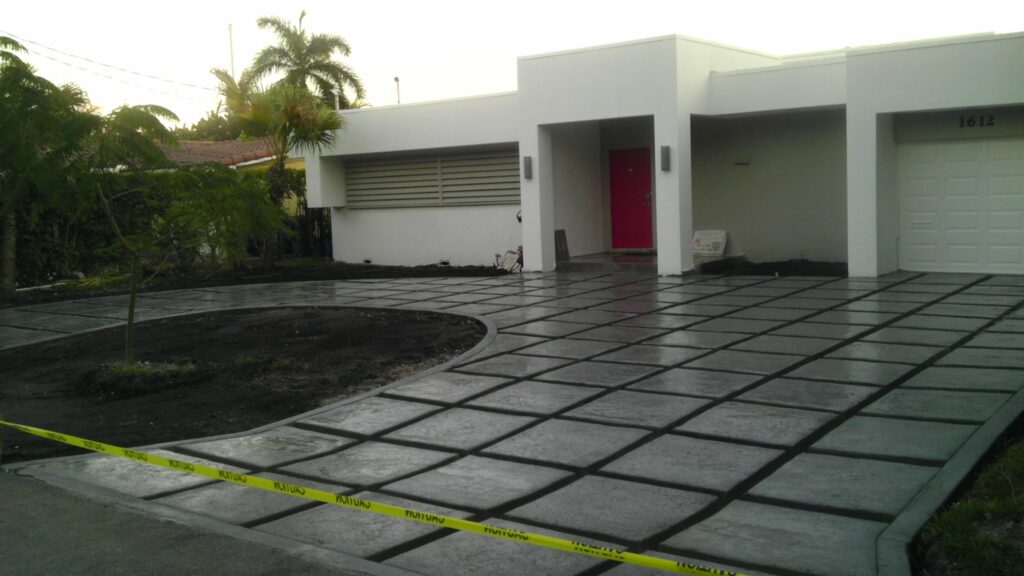
A driveway material has to do more than match a South Florida home. It must handle intense sun, heavy seasonal rain, daily vehicle loads, irrigation overspray, tree roots, and water moving toward the street without creating low spots near the garage.
This guide compares the main choices homeowners consider—concrete, decorative concrete, pavers, and asphalt—so you can ask better questions before requesting estimates. The best choice depends on the site, the desired appearance, maintenance expectations, and how the driveway connects to sidewalks, aprons, drainage areas, and neighboring grades.
Start with the site, not the surface
Two homes on the same street may need different solutions. Before selecting a material or finish, a contractor should review the condition of the existing base, driveway slope, drainage path, nearby roots, utilities, street connection, and any areas where vehicles regularly turn or park.
In South Florida, drainage deserves special attention. A beautiful surface can still be a poor investment if water collects against the garage, flows onto a neighboring property, or repeatedly washes material from beneath an edge. Permitting and neighborhood requirements can also affect the allowed width, apron, and work near a sidewalk or public right-of-way.
Concrete driveways
Concrete is a practical choice for homeowners who want a durable, continuous surface with straightforward maintenance. A broom finish provides traction, while decorative color, borders, exposed aggregate, or patterned treatments can change the appearance without changing the basic slab system.
Why homeowners choose concrete
- A solid surface that works well for daily vehicle traffic.
- Multiple finish and decorative options.
- Routine cleaning is generally simple.
- The layout can coordinate with walkways, aprons, and other concrete flatwork.
What to evaluate
Concrete performance depends heavily on preparation. Ask how the existing material will be removed, how the base will be graded and compacted, where reinforcement and control joints will be used, and how the slab will drain. Some cracking can occur in any concrete slab; good design and joint placement help control where movement appears.
If concrete is your leading option, review Eagle Concrete’s concrete driveway installation and replacement service for the site-review and construction process.
Decorative concrete driveways
Decorative concrete can provide more visual character while retaining a concrete slab beneath the finish. Options may include integral or surface color, borders, textured patterns, exposed aggregate, or separated slab layouts. The right treatment should be chosen with traction, cleaning, UV exposure, and future touch-ups in mind—not appearance alone.
Darker colors and textured finishes may show wear or surface deposits differently from plain broom-finished concrete. Ask what maintenance is appropriate for the specific finish and whether a sealer is recommended for its appearance and use.
Paver driveways
Interlocking pavers are often selected for pattern, color, and the ability to replace individual units if a small area is damaged. They can complement many South Florida architectural styles and can be coordinated with walkways, patios, and pool areas.
Why homeowners choose pavers
- Wide range of patterns, colors, and border details.
- Individual units can be removed for some underground repairs and reset afterward.
- Damaged units may be replaceable without removing an entire continuous slab.
What to evaluate
The finished surface is only as stable as the preparation beneath it. Ask about excavation, base compaction, edge restraint, joint sand, drainage, and how the installation will address vehicle turning areas. Poor preparation can lead to settlement, spreading edges, uneven units, or recurring weeds in joints.
For material and installation options, see Eagle Concrete’s brick paver and travertine services. If natural stone is under consideration, the South Florida travertine planning guide explains vehicle-load, drainage, finish, maintenance, and estimate questions for driveways and other outdoor surfaces.
Asphalt driveways
Asphalt is another material homeowners may compare, but its appearance, heat response, maintenance schedule, and local availability differ from concrete and pavers. In South Florida sun, a dark asphalt surface can become very hot, and periodic maintenance may be needed to preserve the surface. Confirm whether prospective contractors routinely install residential asphalt in your municipality and whether it fits the surrounding apron and drainage conditions.
Questions to ask before choosing
- Where does water go during a heavy afternoon storm?
- Is the existing base stable, or does it need removal and reconstruction?
- Will roots, irrigation, utilities, or a nearby drain affect the layout?
- What surface provides the traction and appearance we want?
- How will joints, edges, borders, or transitions be handled?
- What cleaning, sealing, joint-sand, or repair work should we expect later?
- Which permits or neighborhood approvals apply to the proposed width and street connection?
How to compare estimates fairly
Do not compare only the final total. Make sure each estimate describes the same removal work, square footage, base preparation, thickness, reinforcement or paver system, finish, drainage work, disposal, permit responsibility, and cleanup. A lower estimate may simply omit work included in another contractor’s scope.
Photographs and finish samples can help communicate the look you want, but the site review should determine whether that design works with the property’s slope, access, and water flow.
Choosing the right driveway for your home
Concrete is often a strong fit for homeowners who want a continuous, durable surface. Pavers can be a better fit when pattern flexibility and replaceable units matter most. Decorative concrete falls between those goals by adding visual options to a slab system. The right answer is the one that pairs the preferred appearance with sound preparation and drainage.
To discuss the condition of your existing driveway and compare practical options for your property, contact Eagle Concrete Corp for an on-site estimate.