
Travertine for South Florida Driveways, Patios & Pool Decks
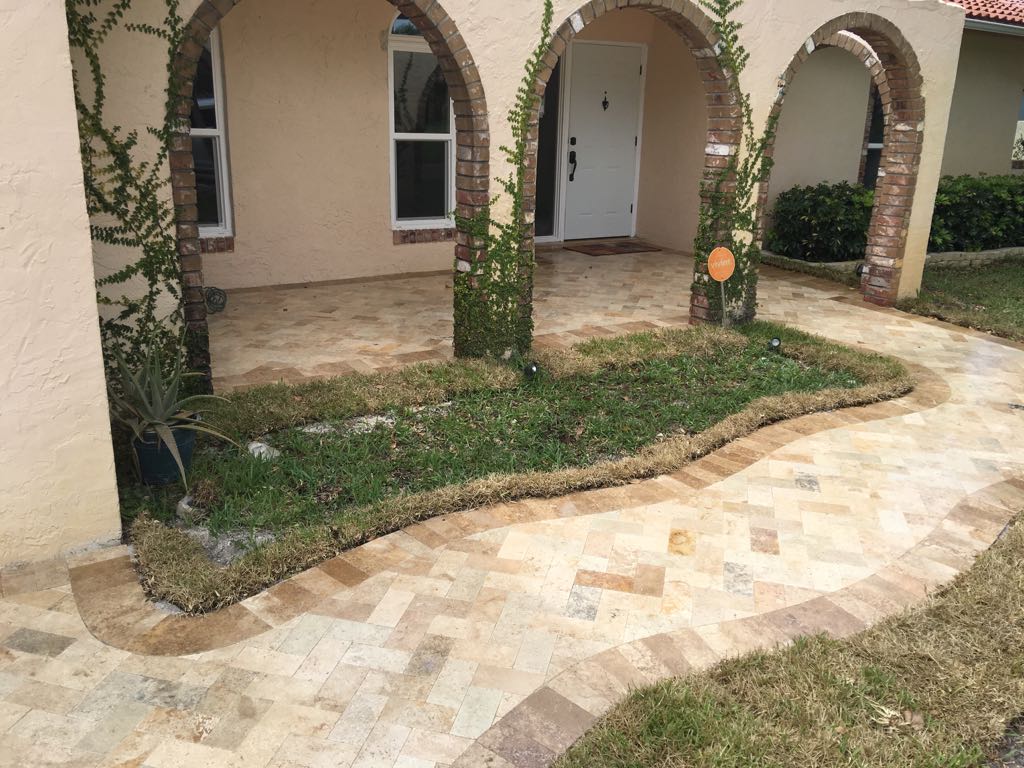
Travertine can be a strong choice for a South Florida driveway, patio, walkway, or pool deck, but the material name alone does not tell you whether it fits a particular property. The stone, finish, installation method, drainage, traffic, and maintenance plan all affect how the finished surface looks and performs.
This guide explains the decisions worth making before selecting travertine and the details to compare when reviewing a proposal.
What is travertine?
Travertine is a natural limestone. Its pores, veins, color movement, and variations from piece to piece are part of its appearance rather than manufacturing defects. Available products vary in density, thickness, edge treatment, surface finish, and color range, so homeowners should review the exact product proposed for the project.
Samples should be viewed outdoors in direct sun, shade, and—when practical—while wet. A small sample cannot show every variation in a full installation, but it can reveal whether the general color, texture, and finish suit the home and surrounding surfaces.
Where travertine can work around a South Florida home
Pool decks
Travertine is often considered for pool surrounds because homeowners like the look and feel of natural stone. Around a pool, compare the specific finish for wet traction and barefoot comfort rather than assuming every travertine product performs the same way. The plan should also address coping, deck drains, door thresholds, equipment access, and transitions to existing patios or walkways.
Patios and walkways
For patios and walkways, consider furniture stability, foot traffic, shade, landscaping, irrigation, and how the new surface meets doors, steps, and adjacent grades. An attractive pattern still needs a sound base and deliberate water flow.
Is travertine suitable for a South Florida driveway?
A travertine driveway needs a product and installation assembly suited to vehicle traffic. Ask the contractor to explain the proposed stone thickness, base preparation, edge restraint, joint treatment, and transitions at the garage, sidewalk, and street. If you are still comparing surface types, Eagle Concrete’s South Florida driveway material guide outlines the broader trade-offs among concrete, pavers, and decorative options.
South Florida conditions that affect the decision
Frequent heavy rain makes grading and drainage central to any outdoor hardscape project. Before material is ordered, the site review should identify where water comes from, where it should go, and whether the planned elevation could direct water toward a garage, doorway, pool, or neighboring property.
Strong sun also changes how colors look and how a surface feels underfoot. Lighter stone is often considered for exposed areas, but comfort depends on the specific product, finish, color, and conditions. Requesting outdoor samples is more useful than relying only on showroom lighting or a catalog image.
Salt exposure, pool chemicals, irrigation, leaves, soil, and nearby landscaping can influence staining and routine care. Tell the contractor how the area is used so material and maintenance recommendations reflect the actual setting.
Texture, wet traction, and surface finish
No outdoor surface should be described as universally slip-proof. Wet traction varies by stone, finish, wear, contaminants, slope, and maintenance. Tumbled or textured products may feel different from honed or polished stone, and the right selection can vary between a covered patio, a pool deck, and a driveway.
Ask to see the proposed finish, confirm that it is appropriate for the intended use, and discuss how cleaning or sealing could affect the surface. Around pools, consider the areas where people enter the water, walk barefoot, or move between wet and dry zones.
Base preparation and drainage matter as much as the stone
Visible settlement, rocking pieces, recurring washout, or water moving in the wrong direction often points to more than a surface problem. A complete proposal should explain removal, excavation, base material and compaction, grading, edge conditions, bedding or setting method, joints, drainage features, and connections to existing surfaces.
The appropriate installation method depends on the application and site. Avoid a one-size-fits-all promise that travertine can simply be placed on any level surface. A contractor should be able to explain why the proposed assembly suits the location and intended load.
Sealing and routine care
Travertine care is not identical for every product or installation. Routine maintenance may include removing loose debris, rinsing appropriately, cleaning spills promptly, monitoring joints and edges, and addressing movement before it spreads. Use cleaning products recommended for the specific natural stone and finish; harsh or incompatible chemicals can damage stone.
Whether to seal—and what sealer to use—depends on the stone, finish, location, appearance goals, and installer or manufacturer guidance. Sealing is not a substitute for proper drainage or maintenance, and it should not be presented as a universal schedule. Read Eagle Concrete’s guide to sealing concrete, pavers, and outdoor hardscape for questions to ask before deciding.
Travertine, manufactured pavers, or concrete?
Travertine offers natural variation and a distinctive stone appearance. Manufactured pavers offer more predictable colors and patterns, while individual units can often be lifted and replaced. Concrete can create a continuous surface in several finish styles. None is automatically best for every property.
Compare the materials based on intended use, base and drainage requirements, surface temperature, wet traction, repairability, maintenance, product availability, and total installed scope. Eagle Concrete’s brick paver and travertine installation service explains how these choices fit into planning, installation, repair, and estimate review.
What to compare in travertine estimates
- The measured area and allowance for cuts or natural variation
- The exact stone, thickness, size, finish, color range, and pattern
- Removal, hauling, excavation, and disposal
- Base preparation, compaction, bedding or setting method, and grading
- Drainage, coping, edge restraints, steps, borders, and transitions
- Joint treatment and any recommended sealer or aftercare
- Protection or repair of irrigation, landscaping, pool equipment, and adjacent surfaces
- Permit or approval responsibilities, where applicable
- Exclusions, cleanup, and project-specific care instructions
Line-item detail makes estimates easier to compare. A lower headline price may represent a different stone, thinner preparation, fewer transitions, or excluded drainage and restoration work.
Questions to ask before choosing travertine
- Is this exact product and finish appropriate for the intended use?
- How will the design manage water at doors, garages, pool edges, and property boundaries?
- What natural color and surface variation should I expect?
- How will damaged or settled pieces be repaired later?
- What routine care does the stone supplier or installer recommend?
- Is sealing recommended for this product and location, and what will it change?
Plan the material around the property
The most useful decision comes from matching the stone to the site—not choosing from a photo alone. Eagle Concrete Corp installs pavers and travertine for South Florida driveways, patios, walkways, and pool decks. To compare materials and review the conditions at your property, request a free estimate or call (954) 288-6131.